 By
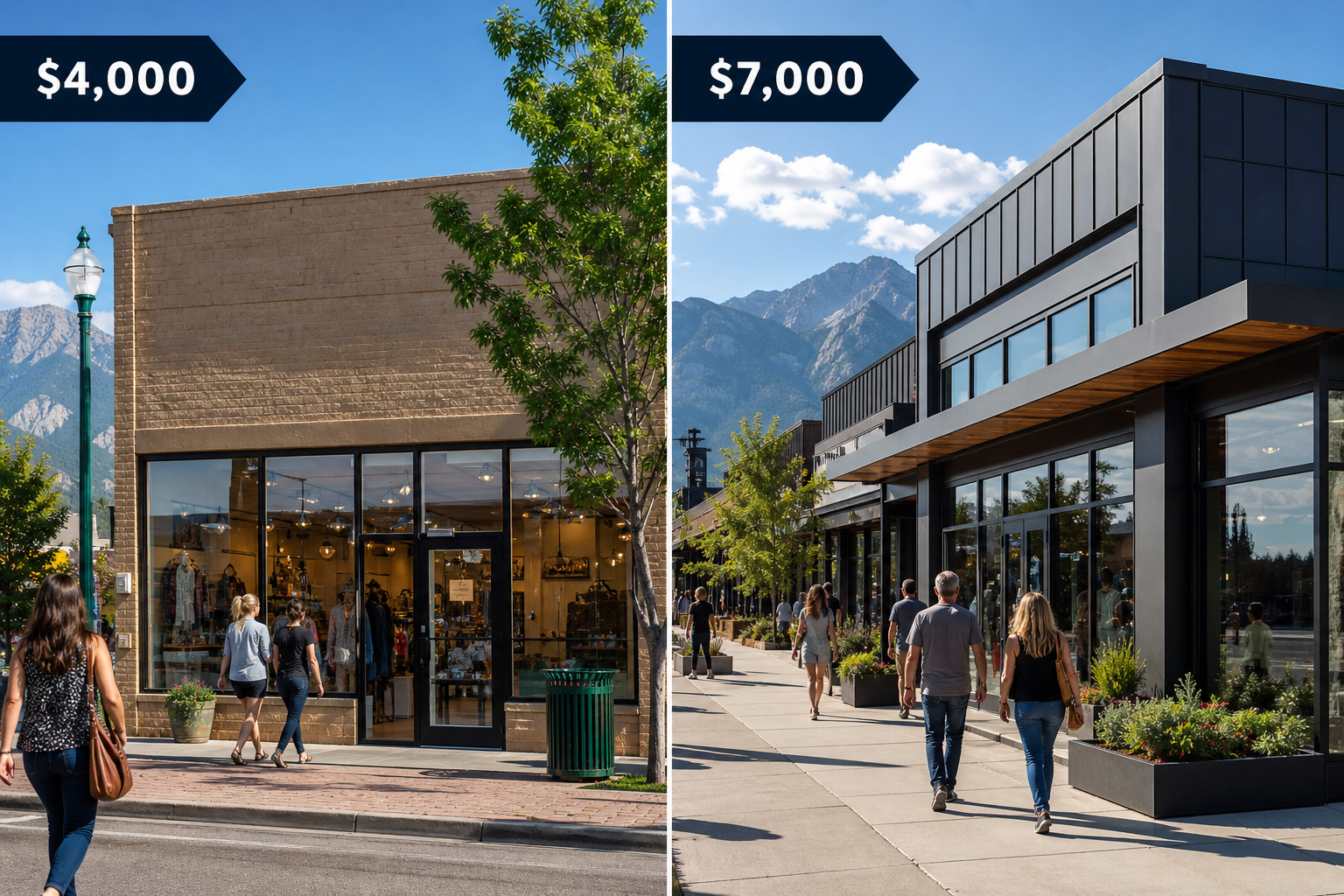
A Colorado Springs business can have a healthy first location and still make a poor second-location decision. Picture two options for 2027. One space in Fountain rents for $4,000 a month. Another in Monument rents for $7,000. The cheaper lease is not automatically safer, and the higher lease is not automatically stronger. A second storefront, office, or service site needs its own numbers, its own assumptions, and its own risk review.
What financial factors should a small business evaluate before opening a second location? Start with location-specific revenue assumptions, total startup costs, lease terms, working capital needs, customer shift risk, and the effect on cash flow if sales ramp more slowly than expected. Good financial planning for second business location decisions compares each site as a separate investment, not as a reward for success at the original location.
What financial factors should a small business evaluate before opening a second location?
A small business should evaluate six core items before opening a second location. Those are projected revenue by site, fixed and one-time commitments, cash reserves, customer cannibalization, tax and reporting effects, and the downside if the ramp-up takes longer than hoped.
That answer matters because expansion decisions often get made from confidence instead of comparison. I see owners assume the original location’s performance proves the next one will work. It does not. Financial planning for second business location expansion should isolate the new site and ask, “If this location stood on its own, would the numbers still justify the commitment?”
- Revenue assumptions for that exact trade area
- Rent, common area charges, utilities, insurance, and site-specific overhead
- Buildout, deposits, signage, equipment, permits, and pre-opening costs
- Working capital for the first 3 to 12 months
- Risk of moving existing customers instead of gaining new ones
- How the second site changes bookkeeping, payroll timing, sales tax processes, and owner cash flow
The U.S. Small Business Administration, through SBA, consistently emphasizes cash flow planning and sufficient working capital as key expansion considerations. That is not glamorous advice, but it is usually where the real answer sits.
Common mistake: using the first location’s profit as the second location’s business plan
A profitable existing site may simply be funding a weak expansion decision. The cleaner approach is to model the new location separately, then test how much support, if any, the original business can afford to provide and for how long.
Why does a $4,000 lease not automatically beat a $7,000 lease?
Rent is only one line item, so it cannot tell you which location is stronger. A $4,000 lease may come with weaker visibility, more tenant improvement costs, or lower revenue potential, while a $7,000 lease may support higher average tickets, better traffic patterns, or stronger repeat business.
Here is the comparison I would want an owner to see before calling either deal “good.”
| Factor | Location A | Location B |
|---|---|---|
| Base rent | $4,000 per month | $7,000 per month |
| Security deposit and upfront lease cash | Could be lower or higher, depending on terms | Could be lower or higher, depending on concessions |
| Buildout needs | May require more tenant improvements | May be more move-in ready |
| Expected sales ramp | Could be slower | Could be faster |
| Customer mix | May rely more on price-sensitive demand | May support different spending patterns |
| Cannibalization risk | May pull from current base | May reach a less-overlapping base |
A stronger decision asks how many dollars of gross margin each site must produce to cover its full monthly burden, not just its rent. If one option costs $3,000 more in rent but reduces opening costs by $40,000 and reaches customers your current site does not, the “more expensive” location may deserve serious consideration.
I like simple math here. Fancy models are fine, but owners need numbers they can challenge. If your assumptions are too hard to explain out loud, they are probably too soft to rely on.
Myth: The lower lease is the safer financial move.
Reality: The safer move is the location with the better full-cost picture, stronger site-specific revenue case, and enough working capital to absorb a slower start. Cheap rent can hide expensive weaknesses.
How should Colorado Springs owners build location-specific revenue assumptions?
Revenue assumptions should be built from the specific trade area, customer behavior, and service mix of the proposed site. A second location in Colorado Springs, Fountain, or Monument should not share one generic sales forecast.
That matters locally. A business looking at central Colorado Springs may be evaluating different traffic patterns, customer routines, and price expectations than it would in Fountain or Monument. Fountain may appeal because of proximity for southern customers. Monument may look attractive for northern reach and convenience. Colorado Springs itself can vary significantly by corridor, neighborhood, and commercial center. None of that requires made-up market statistics to be true. It just means the numbers must be grounded in the actual site and the customer base you expect there.
Along the Front Range, distance on a map does not always match customer behavior. A drive that feels easy between Colorado Springs and Monument on a mild day can feel very different during winter weather or heavier commuter traffic. For some businesses, that changes how much truly new demand a second location can capture.
What should go into a site revenue assumption?
Use a location-specific revenue build, not a copy of your current sales history. Start with realistic transaction volume, average sale size, repeat frequency, and timing of ramp-up for that address.
- Expected monthly customer count by location
- Average revenue per visit, job, or account
- Seasonal swings over 12 months
- Percentage of revenue likely to come from existing customers who may simply switch sites
- Time to reach a stable run rate, such as 3, 6, 9, or 12 months
How do you test for customer shifting between locations?
Test how much of the second location’s revenue is actually new. If 30 percent, 40 percent, or 50 percent of projected sales merely move from your current site, the expansion may add complexity without adding enough profit.
This is one of the biggest blind spots in financial planning for second business location work. If your north-side customers stop visiting your Colorado Springs location and start using the Monument site instead, total company revenue may barely move while fixed costs increase sharply. That is not growth. That is relocation disguised as expansion.
If revenue is already concentrated in a narrow set of customers or accounts, this is a good time to review related risk thinking too, like customer concentration for Colorado Springs owners.
What startup commitments and working capital should be modeled before signing?
Model both one-time opening costs and the cash cushion needed after opening. Many second-location plans fail on liquidity, not profitability on paper.
Owners usually remember rent and equipment. They often undercount deposits, utility setup, legal review, signage, furniture, marketing for the opening period, initial inventory if applicable, and extra bookkeeping or payroll timing pressure. The U.S. Census Bureau has reported for years that many employer firms operate with relatively modest payroll size, which is a good reminder that even small timing mismatches in receipts and expenses can matter quickly.
How much working capital is enough?
The right amount depends on the monthly burn rate and how long the ramp could take. A practical model often tests 3 versions, a base case, a slower case, and a disappointing case.
For example, your model might ask:
- What is the full monthly outflow at the new site?
- How many months could the location operate below target?
- How much cash can the original business contribute without creating strain?
- What happens if buildout runs 10 percent or 15 percent above plan?
In my experience, owners get better answers when we stop discussing “startup cost” as one number and instead split it into opening cash and survival cash. Those are different needs.
Clean records matter here. If the books from the first location are not current enough to show dependable margins and expense timing, the expansion math gets shaky fast. That is one reason businesses often pair planning work with bookkeeping support before making a larger commitment.
What would support a go, delay, or reconsider decision?
A go decision needs a supportable revenue case, manageable startup costs, and enough liquidity for a slower launch. A delay decision fits when the idea may work but the assumptions or cash position are still weak. A reconsider decision fits when the second location mostly shifts existing demand or creates too much financial exposure.
Here is a practical decision matrix I would use with an owner comparing Colorado Springs, Fountain, Monument, or nearby options.
Go, delay, or reconsider checklist
- Go: Revenue assumptions are site-specific, startup costs are fully listed, lease terms are understood, and working capital covers a slower ramp.
- Delay: The concept may be sound, but customer-shift risk is still unclear, books need cleanup, or cash reserves are thinner than the model requires.
- Reconsider: The location depends too heavily on existing customers moving over, the monthly fixed burden is too high, or the downside case would pressure the whole business.
The value of advisory modeling is not to talk you into expansion. It is to make the exposure visible before you sign the lease. That is the real work behind financial planning for second business location decisions. At Patterson Tax & Accounting, our business advisory services and strategic planning work are designed to help owners compare commitments, test location-specific assumptions, and see the cash impact clearly.
"A second location should earn its way onto the balance sheet. It should not get there just because the first one had a good year." , Debbi
If you are targeting 2027, now is a sensible time to start. Lease negotiations, tax planning, bookkeeping cleanup, and scenario testing all take longer than most owners expect. The goal is not a broad growth forecast. The goal is a disciplined yes, not yet, or no.
Compare the location, not just the rent
If you are asking what financial factors should a small business evaluate before opening a second location, I can help you work through the commitments, assumptions, and downside exposure before you expand in Colorado Springs, Fountain, Monument, or a nearby community. Book a free initial consultation with Patterson Tax & Accounting at https://pattersontaxcpa.com. Tax Expertise With a Personal Touch This article is general information, not financial, tax, or insurance advice. Talk with a licensed professional about your specific situation.
Book your free initial consultation